Introduction: Why Employee Data Is Scattered Across Too Many Systems
As businesses grow, employee information often becomes spread across multiple applications. HR teams may use one system for employee records, another for recruitment, a separate platform for payroll, and several spreadsheets for tracking attendance, performance reviews, or training records.
At first, this approach may seem manageable. Over time, however, disconnected systems create challenges that affect efficiency, accuracy, and decision-making. Teams spend valuable time searching for information, updating records in multiple places, and resolving inconsistencies between systems.
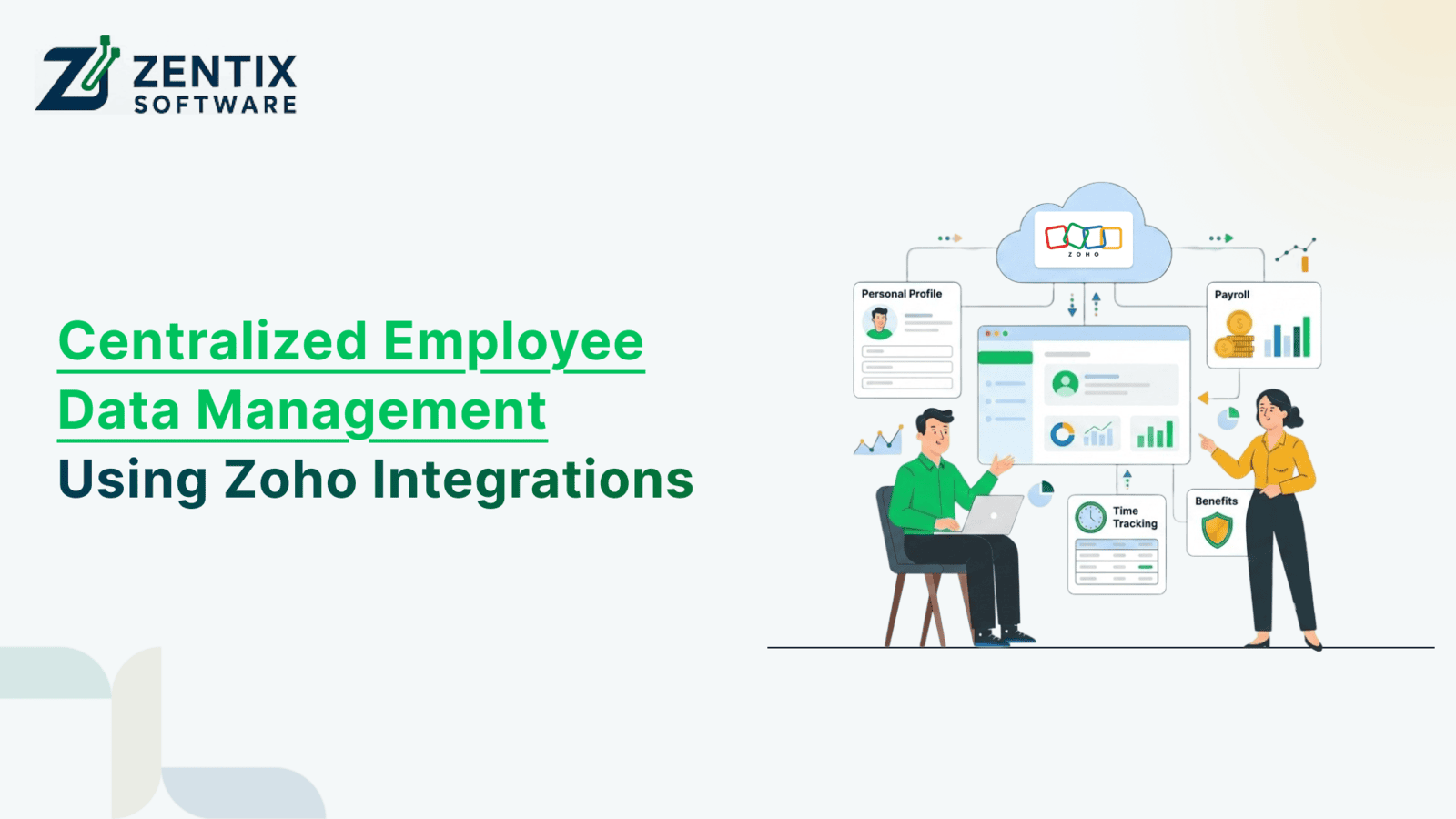
Centralized employee data management solves this problem by bringing employee information together into a connected ecosystem. With Zoho integrations, businesses can create a single source of truth for workforce data, making it easier to manage employee records, automate HR processes, and improve collaboration across departments.
What Is Centralized Employee Data Management in Modern Human Resources?
Centralized employee data management has become a critical priority for modern Human Resources teams. As organizations grow, employee information often becomes fragmented across recruitment systems, payroll software, communication tools, and spreadsheets. A centralized approach helps businesses create a single source of truth while improving workforce visibility and operational efficiency.
Through integrated Zoho Services, organizations can connect employee-related applications and eliminate data silos that slow HR operations.
Employee Data Silos and Their Impact
Data silos occur when information is stored in separate systems that do not communicate with one another. For HR teams, this often means updating the same employee information multiple times across different platforms.
When employee data becomes fragmented:
Records become inconsistent
Reporting becomes more difficult
Compliance risks increase
HR processes slow down
Employee experiences suffer
The Cost of Disconnected HR Systems
Disconnected systems create hidden operational costs. HR professionals spend unnecessary time manually entering data, correcting errors, and responding to requests that could be automated.
These inefficiencies often become more noticeable as organizations scale and workforce management becomes increasingly complex.
Benefits of a Unified Employee Database
A centralized employee database provides:
Improved data accuracy
Faster access to employee information
Better workforce visibility
Reduced administrative workload
Stronger compliance management
More efficient HR operations
Common Human Resources Challenges Caused by Disconnected Employee Data
Many Human Resources departments struggle with disconnected systems that create duplicate records, inconsistent information, and time-consuming manual processes.
Duplicate Employee Records
When employee information is stored in several platforms, duplicate records become common. Different departments may maintain separate versions of employee data, creating confusion and inconsistencies.
Manual Data Entry Across Departments
HR teams often spend hours transferring information between recruitment, payroll, benefits, and employee management systems. Manual entry increases the risk of human error and consumes valuable resources.
Inconsistent Employee Information
Changes to employee details, such as addresses, job titles, or department assignments, may not be updated consistently across all systems.
Compliance and Audit Challenges
Organizations must maintain accurate records for audits, reporting requirements, and regulatory compliance. Fragmented data makes these tasks more difficult and time-consuming.
Limited Workforce Visibility
Without centralized reporting, leadership teams often struggle to gain a complete view of workforce trends, employee performance, and organizational growth.
Delayed HR Processes
Disconnected systems can slow down onboarding, approvals, employee updates, and other essential HR activities.
How Zoho Integrations Help Centralize Employee Information
One of the biggest advantages of modern Zoho Services is the ability to connect multiple business applications into a unified ecosystem.
Instead of relying on disconnected software platforms, organizations can synchronize employee information across systems and reduce administrative complexity.
Zoho People Integration
Zoho People serves as a central hub for employee information, helping HR teams manage records, attendance, leave requests, performance tracking, and employee lifecycle activities.
When integrated with other Zoho applications, employee data remains consistent across departments.
Employee Lifecycle Management
Employee information evolves throughout the employment journey.
Integrated systems support:
Recruitment
Hiring
Onboarding
Training
Performance management
Promotions
Offboarding
Maintaining connected records throughout this lifecycle improves efficiency and accuracy.
Cross-Department Data Sharing
Departments often require access to different types of employee information. Integrated systems allow authorized users to access relevant data without creating duplicate records.
Real-Time Record Updates
Changes made within one system can automatically update across connected applications, helping ensure that employee information remains current and reliable.
Key Zoho Applications That Support Employee Data Management
Several Zoho applications play an important role in workforce management.
Zoho People for HR Management
Zoho People provides tools for employee record management, attendance tracking, leave administration, performance reviews, and employee engagement.
Zoho Recruit for Talent Acquisition
Recruitment data can flow directly into employee management systems, reducing manual work during hiring and onboarding.
Zoho Payroll for Employee Compensation
Payroll integration helps maintain consistency between employee records and compensation data.
Zoho Cliq for Internal Collaboration
Communication platforms improve collaboration while keeping employees connected across departments.
Zoho WorkDrive for Document Management
Employee documents can be securely stored, organized, and accessed when needed.
Zoho Creator for Custom HR Applications
Businesses with unique requirements can develop customized HR workflows and applications tailored to their operations.
The Role of AI Workflow Automation in HR Operations
Modern HR teams are increasingly adopting AI Workflow Automation to streamline repetitive processes and improve operational efficiency.
Automation helps reduce manual effort while maintaining consistency throughout employee management activities.
Automated Employee Onboarding
New employee onboarding often involves multiple departments and repetitive tasks.
Automation can help:
Assign onboarding tasks
Collect required documentation
Schedule training activities
Trigger system access requests
This creates a smoother experience for both employees and HR teams.
Leave and Attendance Management
Automated workflows can process leave requests, attendance tracking, approvals, and notifications without requiring constant manual intervention.
Employee Approval Workflows
Organizations can automate approvals for promotions, transfers, reimbursements, and policy acknowledgments.
Document Collection and Verification
Employee documentation can be collected, reviewed, and stored through automated processes that reduce administrative overhead.
Performance Review Automation
Performance management processes become more consistent when review schedules, reminders, and evaluation workflows are automated.
Improving Data Security and Compliance Through Centralization
Employee information contains highly sensitive data that requires proper protection.
Successful employee data management depends heavily on strong Security and IT Management practices.
Role-Based Access Controls
Not every employee requires access to all workforce information.
Role-based permissions help ensure that users can only access information relevant to their responsibilities.
Protecting Sensitive Employee Information
Organizations should establish policies for protecting:
Personal employee details
Compensation records
Performance reviews
Medical information
Employment agreements
Compliance and Record Retention
Centralized systems help businesses maintain accurate records and meet compliance obligations more effectively.
Secure Data Sharing Across Teams
Controlled access helps departments collaborate while protecting confidential information.
Benefits of Centralized Employee Data for Growing Businesses
Organizations that centralize workforce information often experience improvements across multiple areas.
Faster HR Processes
Employees spend less time searching for information, updating records, and managing administrative tasks.
Improved Employee Experience
Employees benefit from faster responses, streamlined onboarding, and more efficient HR support.
Better Workforce Reporting
Leadership teams gain clearer visibility into workforce trends and organizational performance.
Reduced Administrative Work
Automation and integration significantly reduce repetitive manual tasks.
More Accurate Decision-Making
Reliable employee data supports better planning, forecasting, and workforce management decisions.
Scalable HR Operations
Centralized systems make it easier to support business growth without dramatically increasing administrative complexity.
Why Zoho Consulting Matters for Successful HR Integrations
Technology alone does not guarantee success. Effective implementation requires thoughtful planning and a clear understanding of business processes.
Understanding Business Requirements
Every organization manages employees differently. Integration strategies should align with operational goals, workforce structure, and compliance requirements.
Building Scalable HR Workflows
Workflows should support both current needs and future growth.
Custom Integration Strategies
Some businesses require specialized integrations between HR systems, payroll platforms, communication tools, and custom applications.
Long-Term System Optimization
As businesses evolve, employee management systems should continue to adapt and improve.
Best Practices for Centralizing Employee Data Using Zoho
Businesses can maximize success by following several proven practices.
Standardize Employee Records
Establish consistent formats and processes for maintaining employee information.
Define User Access Levels
Control access based on roles and responsibilities.
Automate Repetitive Processes
Leverage AI Workflow Automation to reduce manual tasks and improve consistency.
Conduct Regular Data Audits
Periodic reviews help identify inaccuracies and maintain data quality.
Maintain Security Policies
Clear security standards help protect employee information and support compliance.
Continuously Improve Workflows
Employee management processes should be reviewed regularly to identify opportunities for optimization.
How Businesses Build Connected HR Systems
Many organizations begin their workforce transformation journey by connecting key HR applications and eliminating data silos.
By integrating employee records, recruitment workflows, payroll systems, communication platforms, and document management tools, businesses can create a more efficient and scalable HR environment.
At Zentix Software, organizations often seek support for workforce system integrations, HR automation initiatives, and long-term optimization strategies that improve operational efficiency while maintaining data accuracy.
A well-designed employee management ecosystem not only simplifies daily operations but also provides a stronger foundation for future growth.
Conclusion
Managing employee information across disconnected systems creates unnecessary complexity for growing organizations. Duplicate records, manual processes, inconsistent data, and limited visibility can all slow HR operations and impact employee experiences.
Centralized employee data management offers a practical solution by creating a connected environment where information flows seamlessly between systems.
Through Zoho AI Automation, businesses can improve data accuracy, strengthen security, automate repetitive tasks, and create more efficient workforce management processes. Combined with thoughtful planning and effective implementation, centralized employee management helps organizations build a stronger foundation for growth while supporting both employees and business objectives.